Wednesday, August 17, 2022

Pigeons and the Importance of Doing Things Badly

We tend to think of nature as a force separate from ourselves. When we think of nature, we often picture forests, fields, rivers, and oceans; we think of spaces removed from human influence. On an intellectual level, though, we know that we are actually a part of it, that it is all around us even when we are in the middle of the city. Sadly, modern life is so busy that it can be difficult to find opportunities to appreciate the beauty of the natural world we live in. I believe we should make a conscious effort to include nature appreciation in our daily lives. It is healthy for us, and there is so much we can learn from it. 

One way I try to include nature appreciation in my every day routine is by spending time reading a good book on my balcony. While doing so, I recently befriended a pigeon who visits for the seeds that messier birds drop from the bird feeder. Apparently, I am a calm enough presence that Herbie (yes, he has a name ) has decided I'm not a threat. He likes to chill out on the balcony less than a foot away from me, just soaking in the sunshine. The way he acts around me made me wonder what I might learn from him, and if there's any chance he'd nest on the balcony, meaning I'd have something like a pet. My apartment obviously doesn't allow pets because the world is cruel and unfair. 

My friend Herbie is camera shy.
Let's not underestimate pigeons. They are so smart that they can learn every letter in the English alphabet, and are even capable of learning to read some words. They've also been influential in human history. A carrier pigeon was responsible for delivering the results of the very first Olympic games. Another historical carrier pigeon named Cher Ami, carried important wartime messages back to his home in France during WWI. Despite being shot by the enemy he managed to deliver his last message, and was decorated as a hero when he died. 

Baby Pigeons and those used for food are called 'squab' which, you know... isn't creepy at all.

Pigeons are very sociable. Not only can they recognize themselves in a mirror, they recognize humans by their faces as well. Pigeons, like many other birds, mate for life and are great co-parents, taking turns caring for the eggs and chicks. They take their relationships very seriously. Unlike some birds, they will often find another love if their partner dies before they do. Good for them. Nikola Tesla, the famous engineer, physicist and germophobe, used to take injured pigeons home with him to help them recover. One pigeon who visited him frequently formed such an intense bond with him that he referred to her as his wife.
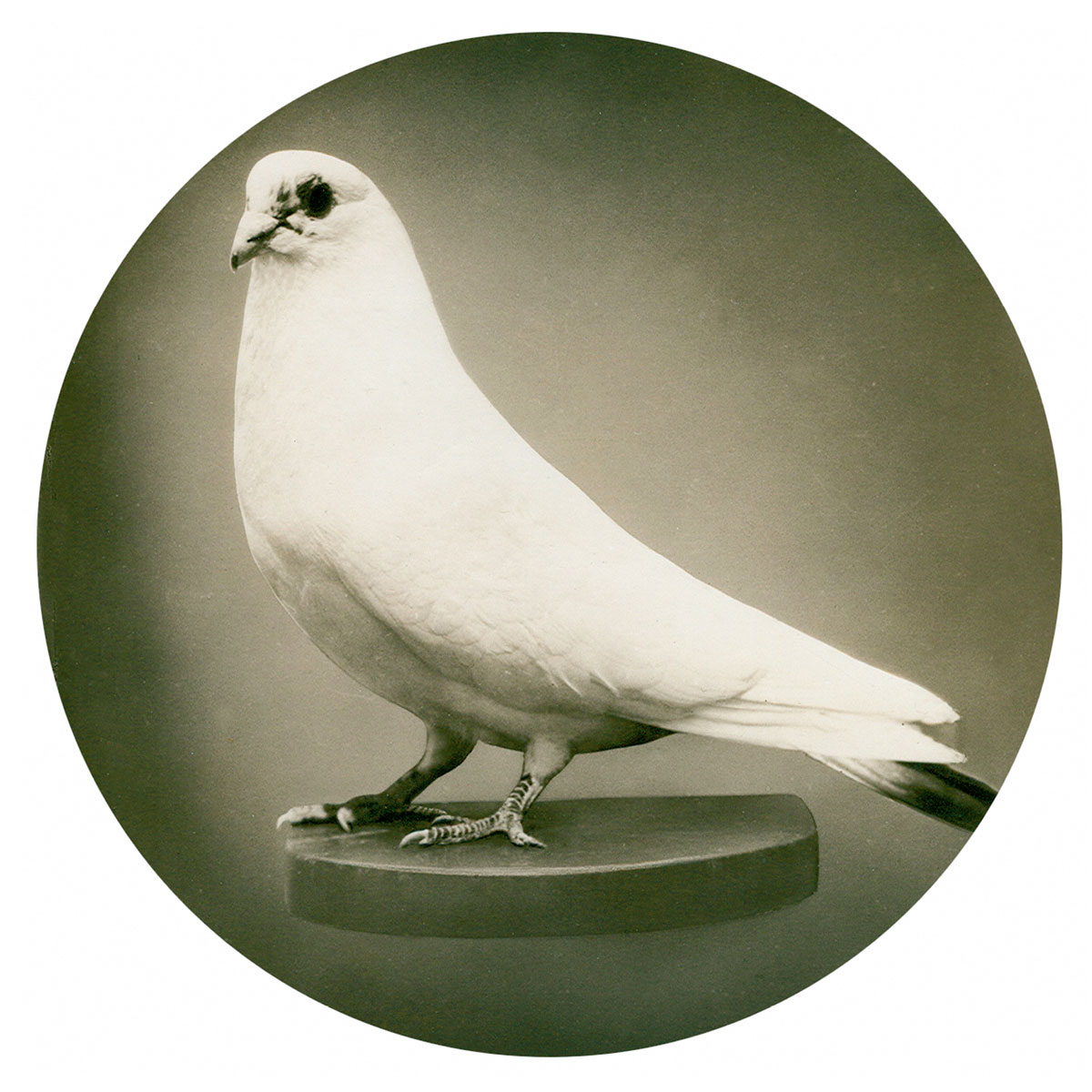
Image often used to depict Tesla's wife

I get a bit caught up in the fun facts, but the most important thing I've learned from Pigeons has to do with their nesting habits. Many birds are known for making beautifully intricate nests. Not pigeons. Some pigeon nests are comprised of only a handful of sticks tossed into a circle on the floor. It's easy to take a look at what a pigeon considers a finished nest and feel better about the mediocre results of our own efforts. But there is, as always, more to it than this.

Weavers are known for intricate nests. Hummingbirds for tiny nests.
Pigeons are known for their lazy nests. 

What is a pigeon parent trying to accomplish by building its nest? The only thing they really need is for the egg to not roll away from them. It might not be pretty, but their goal is accomplished. The first layer to this pigeon nest lesson is that any effort is better than no effort at all. Better to get things done poorly than to never do them. The perfect is the enemy of the good. 

Pigeons are lovably bad at building nests.

Here comes the second layer. Pigeons literally build a second layer of nest on top of the first. They have such a strong sense of home that they tend to use the same sight for nesting again and again. Before each new set of eggs is laid, the parents build up a fresh layer of twigs to keep their new hatchlings clean and safe. After a pigeon family has added to their nest a few times, it can become quite impressive. 

The pigeon nest can have a minimalistic beauty.

Pigeons make their first attempt, and it's very rough around the edges, but it gets the job done. They make their second attempt, and things are starting to come together, but the seams are very much still visible. They don't care. It gets the job done. So they just keep working at it and working at it, building one nest on top of the other until they've created something to look up to. Literally. Pigeon nests can grow to be around 8 inches tall. 

If you keep working, you'll make something you can be proud of. 

So take a note from the pigeon. Whatever that thing is that you want to be doing. Just do it. Keep doing it. It really doesn't matter if your first attempt looks like a random pile of sticks. You still did the thing. The only way to get good at something is to be bad at it first. Continue to practice and you'll have built something to be proud of before you know it.

I believe in you, and Herbie does too.  

Herbie says 'byeeee'
For more information:

For random fun facts about Pigeons. 

National Audubon Society on why we sometimes think of pigeons in such a negative way


Monday, August 1, 2022

Skyglow Flyglow, Fireflies and Light Pollution

Imagine a late evening walk in mid June. The sun has just set, leaving behind the feel of the warmth of the day. A breeze gently rustles fresh green leaves that have become silhouettes of themselves. The faintest glow that the sun has left behind on the horizon has just begun to disappear. First one, then two, then three blinking lights floating through the air. Before you know it you're surrounded. All around, in the trees, the grass, the sky, fireflies dance gently in unexpected patterns, blinking in and out of existence. It feels like you've entered into some secret, magical place. A fairy garden where everything is just as it should be.

Fireflies and stars, mirroring one another.

Those of us who are lucky enough to have experienced this know how impactful it can be. Fireflies have always captured human awe and imagination. They are like living stars on earth, and just like the stars themselves, they are beginning to go dim. Where I live, fireflies are most active in June and July. We have moved into August now, and I haven't seen as many as I used to. Studies by the Xerxes Society indicate that firefly populations are indeed in decline, and that at least one species of firefly is in danger of extinction. So let's take a look at these fascinating creatures, and then at a very simple way that each and every one of us can ensure that it survives. 

*Skip ahead to the next asterisk if you're here for the wonders of nature and conservation tips, not the icky bug stuff. 

There are about 2,000 known species of firefly, and each is unique. Adult firefly eating habits are a good way to see just how different these species can be from one another. Some simply sustain themselves with pollen. Others cleverly stake out spider webs. Then, when the time is right, they battle the spider for its neatly wrapped to-go style meal. One species in particular has a rather disturbing dining habit. The females of this species mimic the flash pattern of smaller firefly species, tricking unsuspecting males into coming closer. When they do, they are quickly trapped and eaten by the larger, trickier firefly. In contrast, some species of firefly eat nothing at all once they reach their adult form. 

The Photuris Firefly, known as the femme fetal of the bioluminescent world

* Okay, you're safe. Please come back! Thank you for sticking with me <3

Fireflies are most famous for their glow, or bioluminescence. It's probably the reason they strike so many of us as magical rather than just another freaky beetle. But fireflies don't glow just to entertain and inspire us. While we don't know everything about firefly behavior, one thing is clear. Fireflies use their lights for mating communication. Scientific observation, documentation, and research on firefly behavior is not yet robust enough to rule out other topics of conversation hidden in their flash patterns. One phenomenon that has now been officially observed and documented, but is yet to be understood is the synchronization of entire fields of fireflies in places like the Great Smoky Mountains National Park. There is more than one mystery here. How, mathematically, can these fireflies coordinate their synchronized light show? Why? What biological benefit could this type of broad cooperative behavior have? Or are they, in human terms, simply making music?

One species known to exhibit synchronizing behavior is Photinus Carolinus.

I was surprised to learn that it's not just adult fireflies who glow. Many species of firefly have bioluminescent capabilities during every stage of life. This means that when disturbed, even their eggs can glow. 

Glowing firefly eggs.  

Fireflies and their glow have even helped to save human lives. The enzymes that cause their bioluminescence have various medical applications, including an effective process for detecting blood clots. At this point, humans have managed to artificially replicate the enzyme, but we used to get it directly from fireflies. 

We still have more to learn from them. Fireflies are more efficient at producing light than humans are. Even with the advent of fluorescent light bulbs, about 90% of energy from artificial bulbs is released as light, leaving 10% to be released as heat. Fireflies produce light at 100% efficiency. And it turns out that light is exactly the issue. We live in a world of ever increasing light pollution. This really doesn't sound like a big deal, until we start to look at the scale of the impact it has. The excessive lighting used in and outside of cities has caused "sky glow." This means that most stars are obscured by the light of human civilization reflected back on itself. According to National Geographic, 80% of Americans can no longer see the milky way dusting across the night sky. Those of us who were born and raised in cities might not even realize what we were once able to see in the sky on a dark starry night. 

Nasa's visual representation of sky glow for stargazing reference.

Since the natural night and day lighting cycle has been foundational in the development of life on earth, it is likely that all living things exposed to excessive light during the night are adversely effected in ways we do not yet understand. We've already found that several animals are directly affected by the lack of a dark night. Humans rely on the absence of blue light at night to produce melatonin and have healthy sleep. Frogs rely on the dark hours of the day to know when to begin their chorus of croaking, the disruption of which prevents them from mating. Perhaps even more sad is the way that sea turtles can be affected by unnatural light. According to the World Wildlife Fund, nearly all species of sea turtles are now endangered. Newly hatched sea turtles head straight for the ocean, using the light of the bright horizon between water and sky to guide them. Unnatural lights can confuse them, causing them to crawl away from the safety of the water. The International Dark Sky Association claims that, due to light pollution, millions of hatchling sea turtles die on the Florida coastline every year.
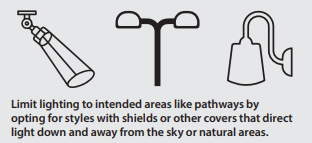
When shopping for outdoor lighting fixtures, look for the
 International Dark-Sky Association seal of approval 
to help decrease light pollution in your neighborhood.


Consider what we know about the firefly, combine that knowledge with the effects of light pollution, and you will realize how devastating artificial light can be for fireflies. A nocturnal creature using its glow to attract mates has no chance of mating at all when it finds itself living in a well lit night.

For many species affected by light pollution, research has shown that the colour of light makes a huge difference. Humans who avoid blue light before bed, for example, tend to get a better night's sleep. Red or yellow light tones (long wavelengths) are generally healthier than blue light tones. The firefly itself has a wide range of light tones. Some species glow blue, some green, others orange or yellow. Is it possible that taking advantage of the broad spectrum of light available to us and focusing our outdoor lighting away from blue tones could make a difference? For many creatures, yes! Unfortunately, this rule of thumb does not apply to fireflies. A study conducted at Tufts University last year, found that no colour of artificial light is unharmful to fireflies, and that amber light (which for many creatures is most helpful) might actually be the worst for fireflies. 
Firefly with yellow glow
The good news is that there are still some very easy things we can do to help these fascinating creatures. Something as simple as turning outdoor lights off at night when they are not in use, or closing window blinds after the sun goes down is all it takes to improve the fireflies chance of survival. Every little bit counts. You or someone you know may already have outdoor lighting set to motion sensors or timers, so that they are only lit when they're in use. This is a great way to save on the electric bill, but the fireflies are thankful for it, too! 


I think it's exciting to hear how much we can help in little ways that don't even inconvenience us. If only every act of conservation were so easy. A lot of the lighting we use is inefficient. Pay attention to billboards the next time you're driving at night. Unless you live in an area where billboards are regulated to decrease light pollution, you'll likely see that the lights used to illuminate them are pointed straight up from below. This means that light is being directed at the sky and diffusing away from the billboard. The simple switch of pointing billboard lights downward instead would decrease light pollution drastically. It's all about being just a little bit smarter than we were yesterday. The same line of thinking applies to lighting outside people's homes and businesses. Intentionally directed, shielded lighting ensures that lights are effective where we need them to be, and allows wildlife to coexist with us.
 Shielded lighting has the added benefit of avoiding the decrease
 in dark vision that unshielded lighting often results in for humans. 
This resource from the Xerxes Society has great information on how to minimize your light pollution impact on fireflies (note that some of the information regarding light colour is outdated). 

Thank you for taking the time to consider the fireflies. A little mindfulness about our effect on other creatures goes a long way. 


Sunday, July 24, 2022

Unique Bee Nests We Didn't Know Existed

The artful home of Osmia Avosetta
I recently made the mistake of moving a bumblebee hive that had so quietly and politely established itself in a loose pile of hay that I hadn't noticed it was there until it was too late. When the forager bees began to return to the spot where their hive used to be, I noticed what had happened, found the clump of hay that buzzed when I poked it, and tried to put it back where I'd found it. I am very much hoping that these bees will be able to set right everything that I destroyed. Bees are known for being industrious and efficient hard workers, so I think they'll be okay. However, this is not what impressed me most about my newfound backyard hive. What impresses me most is that though their home had been literally tossed aside, pulled apart and tossed again, the Bumblebees did not become at all aggressive. The only emotion I sensed from them was polite confusion. 

Their gentle demeanor and total lack of desire for revenge or retaliation almost made me cry. They are such sweet little creatures.  

I couldn't believe that I, a former beekeeper, had never noticed a bumblebee nest I walked passed every day, but it is amazing what we notice when we're tuned in to it. Walking around outside after putting my new friends back, I noticed little mason bees slipping into holes in the wood, wasps disappearing into openings in the dirt, and even a bumblebee waddling into an old rodent burrow along the side of the garage. 

Hard working bumblebee with lots of pollen on its leg
My worry for the bumblebees who had been so nice to me after I disturbed their home lead me to research bumblebee hives, which are quite different from the honeybee hives I'm familiar with. Bumble bees hives have less than 1% of the population of a honeybee hive and they are often found in abandoned burrows made by other animals, or old hay bails (like mine was). Honeybees and bumblebees are fascinating enough on their own, but there are so many types of bees, all fantastically varied in appearance and behavior.

Here's where I got sucked into the rabbit hole and couldn't get back to sleep. I'd like to share with you 5 crazy bee nests that sound like something out of a fantasy novel. 


Houses Made of Flowers

Osmia Avosetta, a solitary bee (meaning it lives on its own and not as a part of a hive), carefully cuts flower petals, then glues them together with mud, to build its home. Each nest is a unique work of art! 

The artist, Osmia Avosetta


Bees Who Burrow Through Solid Rock

No exaggeration. Anthophora Pueblo actually does use its mandibles to dig through sandstone and build its nest. Sandstone is soft as far as rocks go, but it's still rock. Because this bee's home is so strong, it can safely wait out unfavorable conditions for up to 4 years before emerging from the rock when the time is right. 

Anthophora Pueblo peaking its head out of it's sandstone nest. 


Australian Spiral Hive Bees

These sweet little stingless bees build beautifully intricate spiral comb propped up on stilts that look like some sort of science fiction nightmare. Tetragonula carbonaria is native to Australia. At this point, nobody knows why they build their homes this way. 

Australian native bee hive viewed from above


The Giant Bee

Fee, Fi, Fo, Fum! this is the largest bee in all the known world. Megachile Pluto is about 4 times larger than a normal honey or bumble bee. It's pretty rare, and for 38 years it was presumed extinct. It was just recently, in 2019, that it was rediscovered on an Indonesian Island. These are the only bees I've heard of who prefer room mates! They tend to make their homes within active termite nests high up in the trees.


Giant Bee outside the home it shares with thousands of termites.


The Cuckoo Bee

The cuckoo bee is an impostor. It infiltrates existing hives and lays its eggs there, to be raised by other bees. It's very difficult to identify, as 'cuckoo bee' is an umbrella term, referring to many different species of bee, each mimicking the appearance of the type of bee it targets. How strange that this bee has no home at all. 

The cuckoo bee could resemble any of these bees.


Have you encountered any unexpected insect homes?

For more information on these amazing creatures, you can check out some of the websites I sourced for this post...

Bees living in stone     Cuckoo Bees     Giant Bees     Spiral Hive Bees      Leaf Cutter Bees

Another beautiful flower nest, just for fun.

Tuesday, July 5, 2022

If You Love Running Up That Hill, Here Are My Top 10 Weirdest Kate Bush Songs That Could Be Your Next Obsession...

With the recent release of Stranger Things Season 4, Kate Bush's epic song, Running Up That Hill has skyrocketed in popularity. Though the song was first released in 1985, last month it hit number 1 in the UK charts, outshining even it's original popularity. 

The emotional scene.

Firstly, let me say that if you haven't seen the original music video for Running Up That Hill, do yourself a favor and watch it now. Beginning with a close up of her own hand reaching out to another dancer, followed by some truly unique dance moves, and ending with her desperately reaching out for connection, carried away in the impersonal sea of other people wearing crude paper masks of her own face, the video compliments the song perfectly. Personally, I think this song was a great choice to represent Max's struggle in Stranger Things season 4, since my interpretation of it has a lot to do with people trying and failing to connect with one another. 

A scene from the Running Up That Hill music video. 

Kate Bush really does whatever she wants to do no matter how weird it is, and it's a beautiful thing. She never lost that childlike creativity that seems to be unrestricted by expectations. In fact, she wrote the initial versions of some of her most popular songs when she was only 13 years old. 
 
So, let's get to it and take a look at Kate Bush's top 10 weirdest songs and music videos.

10 

Them Heavy People

This one is beautiful, but almost tame by Kate Bush's standards. "They arrived at an inconvenient time. I was hiding in a room in my mind... Rolling the Ball..." I can't quite put into words what this means, but still: Same, Kate. Same. Really good art communicates a feeling that can't be as purely or truly communicated in any other way, and Kate Bush does this with every song. 

Kate Bush staring you down, Them Heavy People music video.

9 

Sat In Your Lap

This one really makes us ask that all important question, "What the f***." It features demons, jesters, and (unless I'm seeing things) two guys who seem to be mixing the dunce cap and klansmen looks. Though I suppose that last part might be me mapping my American sensibilities onto things. Oh, and most of them are roller skating. But that's only number nine, so let's proceed. 
KB staring us down again.

8 

The Dreaming

An otherworldly reflection on our treatment of indigenous people, this song includes the bleating of a sheep, sounds of a car crashing, and Kate Bush literally breathing really hard instead of singing. "...erase the race that claim the place and say we dig for ore!" Way to go anti colonialist Kate Bush! 

There's an otherworldly vibe to the music and the video.


7 

Wuthering Heights

That's right, like the book. Apparently, a young Kate Bush became aware of the ghost story and obsession themes in the classic Bronte novel and just thought to herself, yeah, that's good. I could make something out of that, as if it's normal for professional musicians to just write fan songs about stories they like. Again, she really does whatever she feels like doing, and honestly it's an inspiration. This song and the strange dancing that accompanies it inspired her fans so much that huge flash mobs around the world gathered, dressed in red, to recreate the music video. This was in, like, 2018 by the way, though the song first came out in 1978.

The iconic red dress


6  

Under Ice 

I don't want to say much about this one. I just want you to discover it for yourself. All I'll say is it seems to work well as a reflection on the detachment people might start to feel from themselves when dealing with depression. 

Skating fast...

5 

Waking The Witch 

For those of you who know Kate Bush, yes... I'm falling into the trap of listing some of the songs from Hounds of Love in order. They're just really good, okay? This song connects with lots of different themes, and certainly one of them is the fear of women's power. She uses the history of witch trials to emphasize her point, and it gets pretty creepy. Take a listen, witches. 
We have a history of fearing feminine power.


4 

Cloudbusting

Here's where she starts to get funky with her choice in perspective. We'll see more of that later in this list. This song's story is told from the perspective of a young boy reminiscing about the father he's lost. She acts as the young boy in the music video. Things get even stranger with the addition of a fantastical element. Watch, listen, and see and hear for yourself. 


KB as a little boy in Cloudbusting


3 

The Big Sky

This one always makes me feel unapologetically optimistic and dreamy. It reminds me how unimportant the small stuff is when I manage to focus on the big picture. "What was the question? I was looking at the big sky." Very repetitive, but somehow never getting old, The Big Sky helps put things into perspective. 
Looking at the Big Sky 


2 

Experiment IV

Did anyone have 'science fiction story' on their Kate Bush bingo card? We often listen to music to help us work through certain feelings, or to help us feel a certain way. We listen to happy music at a party and we listen to sad music for the catharsis of fully grasping and understanding our more difficult feelings. Music often gets to the heart of us in a way that other forms of communication just can't. It does make some sense for Kate Bush, who's strength is in the music she makes, to reflect on this power. The music video also includes a surprise appearance from an actor I know you'll all recognize! Can you spot them?
 
It was music we were making here until...

  
Prepare yourself. This one is number one for a good reason. Remember how we talked about Kate Bush writing songs from different perspectives? Well, this is one of those songs.. She's telling the story of the effects of radiation poisoning after a nuclear blast. Can you guess which point of view she chose to take? It's the point of view of an unborn fetus, obviously. The music video reflects this, with Kate as the fetus and mother. Enjoy...?
Kate Bush on the dangers of nuclear war.


Kate Bush's work has always been unique. I'm inspired by her to make the types of things I feel like making, not just the types of things other people have been successful with. She is unapologetically herself, and I will be too. A quick thank you to my mom for introducing me to Kate Bush after I read Wuthering Heights. 

I'd also like to note that though I chose lots of songs from decades ago, Kate Bush is still actively creating amazing art today. As I've been writing this, I've listened to Kate Bush songs for inspiration. This made the writing process take about twice as long as it should have, because I kept getting emotional and obsessed over songs that weren't even going in the post. 

Which music have you found yourself connecting with or obsessing over? If I get recommendations in the comments, I'll be excited to check them out :)

Sunday, July 3, 2022

High Heels as a Symbol of Power and a Perfect Metaphor for the Eternal Feminist Struggle

High heeled shoes confuse me. I have a practical personality, so a shoe that seems to be designed to be difficult to move in being so popular with so many people has always been a mystery to me.

There are many reasons not to wear high heels. The lack of a solid base leaves people more vulnerable to injuries. Even for experts, it can be difficult to run in heels. Many complain of aching feet after wearing them. For some, heels are reserved for special occasions, like weddings. But even at these events I've witnessed most people taking off their heels when it comes time to dance, effectively abandoning them halfway through the event. The issues with heels are not just practical. They can be medical. We know that people can suffer from back, hip, and knee pain caused by the tendons and muscles actually changing shape due to habitual heel wearing. Besides, with heels, there's more pressure to match shoes perfectly to an outfit, which just sounds like too much work to me. 

Since I don't personally wear heels, I am, in some ways, the wrong person to speak on the issue, so it's probably a good idea for others to provide their own insight in the comments below. However, with my outsider perspective I have a few ideas about how and why high heels became the power symbol they are today. 

Socialization to wear heels is strong. Even Barbie's feet were originally designed to exclusively wear heels.

It's perhaps important to acknowledge that we see high heels as essentially feminine, though they're not. So few things that we associate with gender are inherently gendered, but don't tune out yet. History backs me up on this one. Heels were originally invented to help people keep their footing in stirrups while riding horses, and first became truly popular as a fashion trend in Europe in the 17th century. Aristocrats (AKA rich men) wore them to emphasize their height and power. Originally, high heels were exclusively a part of mens' fashion.

From Hyacincinthe Rigaud's portrait of Louis the XIV wearing his signature red heeled shoes. 

So, why do so many women still wear these fancy stilts? 

True, heels accentuate aspects of the feminine figure. But this doesn't seem to be enough to explain their popularity. The key, I think, is in the challenge. Many women who make it through a day in heels seem to carry themselves just a little bit taller, their posture a little straighter (even beyond the physical effect of the heals). Heels have become a symbol for feminine strength. How strong must we be if we are able to continue on without flinching, though we've added extra challenge to our experience? The point is that it hurts, but that we are powerful enough for it not to stop us from doing our thing. 

Fred Astaire was great, but don't forget that Ginger Rogers did everything he did... backwards and in heels.

As an extension of this, heels seem to be the perfect metaphor for the feminine experience in modern society. For example, it used to be that women were tied to the home and expected (in most cases) not to work. We've grown since then. Women have joined the workforce, and today it's almost considered odder if an adult woman doesn't work. This, of course, is counterbalanced by the fact that most workers make less money than they used to, which makes it much harder for families to function with only one working adult... but let's not let ourselves get too off topic here. The point is that women can now 'have it all.' Or, perhaps they are expected to do it all. Care for children, keep house, and work. This doesn't apply to every family, of course, but when we listen closely we'll still notice people saying things like, "Ah, it's so nice that your husband helps with the chores..." or, even worse, "How cool that Dad is willing to babysit." Women also tend to have to work harder at their places of work in order to receive the same respectful treatment that men seem to get automatically. Nowadays, many women do everything that men do, but with extra challenges. In short, women do everything that men do, but in heels. 

In a world where almost every other supposedly feminine fashion trend that was inconvenient or uncomfortable has been pushed aside or entirely forgotten, high heels persevere. Just like the women who wear them. 

Tuesday, June 28, 2022

The Beautiful Blobfish; Why We Feel a Lack of Confidence in Ourselves

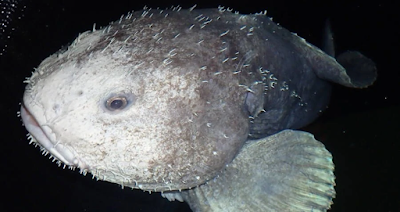
The blobfish (psychrolutes marcidus) is a silly little creature that delights us with its slimy droopy appearance.  This fish makes us smile. It makes us wonder what kind of a world we live in in which something so gross exists just under the surface of the water. It has been the butt of the joke since it rose to internet fame in the early 2000s. 

The truly strange thing about the blobfish is how closely it resembles us. Looking at it's face feels like looking in a distorted mirror. We see an ugly, sad version of ourselves. Its popularity probably has something to do with the fact that it seems to perfectly express a particular mood that we as humans sometimes experience. It is, as the kids say, a mood. 

There might be even more to this mood than we originally realized. The blobfish is not as it seems. It lives at a depth of 600 to 1,200 meters below the surface. Remember what it feels like to dive into the deep end of a swimming pool? At this depth, the pressure is roughly 120 times greater than it is at sea level. The blobfish we know, sometimes called Mr. Blobby, was pictured after being pulled to the surface. 

Note the hook in the corner of Mr. Blobby's mouth. 

The abrupt pressure change that a blobfish experiences when being pulled out of the water by a deep sea fishing net causes extreme tissue damage. The fish undergoes a considerable, and frankly rather violent change. Here's what Mr. Blobby looks like at his natural depth. 

The true appearance of the blobfish. 

In his natural environment, the blobfish is, so to speak, a completely different person. They protect their eggs from predators, cruise around at a top speed of five miles per hour, and can live for about 130 years! The blobfish we know is ugly, helpless, and useless. The blobfish in its natural habitat is normal looking, strong, and interesting. 

Mr. Blobby in his natural habitat.
Let's apply this to our self reflection. Do we really know a person if we only get to know them in the context of them being out of their depth (in the blobfish's case quite literally)? Do we really know ourselves? 

Of course we will appear/feel ugly and bloated, droopy and sad, when we are forced to exist in a context that is outside of our natural way of being. So be who you are. Judge yourself only by how you live in those moments when you truly feel like yourself. How do you feel when you do something creative? When you go for a run? When you are spending time with the people who are important to you? That is who we truly are. Not how we respond when we are at work or at school, when we are around people we don't connect with, or when we do things for the expectations of others or of our society. 

We must never allow others to define us; most importantly, we must never allow ourselves to internally define ourselves by false standards. 

Let's make sure we spend some time in our natural habitats. 

What makes you feel like you're in your natural habitat? Let me know in the comments. 


Sunday, June 26, 2022

How to make your own pro choice pendent/pin with only a paperclip and a pair of pliers.

Let's get crafty. Let's get rebellious. 
Let's remind people what abortions look like when they're not safe and accessible.

The finished product.


Start with a simple paperclip. 

Bend the side up with your fingers. 

Bend the other side up. 

Loosen that last bend. 

Push the open sides in toward each other. 

Notch the ends upward with pliers.

Twist them together tightly with pliers. 

Tighten up the corners.

Bend the top into a hook and clip anything that's left over. 

And you're done! 


I went extra and added blood to mine. 

Have fun and stay angry. 


Fun fact, you can also perform a back alley abortion with just a paperclip and a pair of pliers. Lol. 


The Snow Fly's Wisdom on Helping Others

                              Last winter, on December 23rd, I was standing outside in the snow with a very good friend of mine. It was one ...